Epoxy Flooring vs Tiles vs Concrete: Which Is Best for Your Space?
TL;DR
- Epoxy flooring wins on durability, hygiene, aesthetics, and long-term value — especially for garages, warehouses, showrooms, and basements.
- Tiles suit living areas and bathrooms but struggle under heavy loads and require ongoing grout maintenance.
- Bare/sealed concrete is the cheapest starting point but porous, dusty, and unattractive without a proper coating.
- For most Melbourne homeowners and business owners comparing options, epoxy delivers the best balance of performance and appearance — with a 10-year warranty and a typical 2-day install from Custom Floor Works.
Introduction
Whether you’re renovating a garage, fitting out a commercial showroom, or finishing a basement, flooring is one of the highest-impact decisions you’ll make. It affects safety, maintenance time, how the space looks, and how long it lasts under real-world conditions.
Three options dominate the conversation: epoxy flooring, tiles, and bare or sealed concrete. Each has genuine strengths — and real limitations. This guide breaks them down honestly so you can make the right call for your space.
Epoxy Flooring: Seamless, Durable, and Built for Hard Work
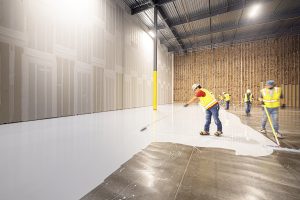
Epoxy flooring is a resin-based coating applied directly over a prepared concrete substrate. When it cures, it bonds chemically to the slab, creating a hard, seamless surface that’s transformed in both function and appearance.
Custom Floor Works offers four epoxy systems suited to different spaces and budgets: Full Flake, Stone Effect, Plain Colour, and Anti-Slip — each available for residential and commercial applications.
The Pros
Seamless and hygienic. No grout lines means no places for bacteria, mould, or moisture to accumulate. This is a major advantage in commercial kitchens, medical spaces, warehouses, and anywhere hygiene matters.
Exceptional durability. A properly installed epoxy system resists heavy vehicle traffic, impact, abrasion, and chemical spills. For garage flooring, it handles the weight and movement of cars, motorbikes, and tools without cracking or chipping.
Highly customisable. Full Flake systems deliver a decorative, multi-tonal finish. Stone Effect coatings mimic natural stone with none of the maintenance. Plain Colour options suit corporate or industrial spaces that want a clean, branded look. Whatever the aesthetic, there’s an epoxy system that fits.
Low maintenance. A smooth, sealed surface is effortless to clean — sweep, mop, done. No resealing grout, no waxing, no special cleaning products required.
Slip resistance by design. Anti-slip additives or aggregate broadcasts can be incorporated into any system, making epoxy a practical choice for wet areas, loading docks, and commercial entries.
Fast installation. Custom Floor Works typically completes a residential or commercial install in just two days, with minimal disruption to your schedule — and backs it with a 10-year warranty.
The Cons
Surface preparation is non-negotiable. Epoxy is only as good as the substrate beneath it. Concrete must be properly ground, cleaned, and free of moisture issues before coating. Cutting corners on prep leads to delamination and premature failure — which is why professional installation matters. Custom Floor Works uses industrial diamond grinding and moisture testing on every job.
Not a DIY product. Achieving a professional, durable result requires proper equipment, mixing ratios, and application technique. Off-the-shelf epoxy kits from hardware stores are a different product entirely and rarely perform as expected.
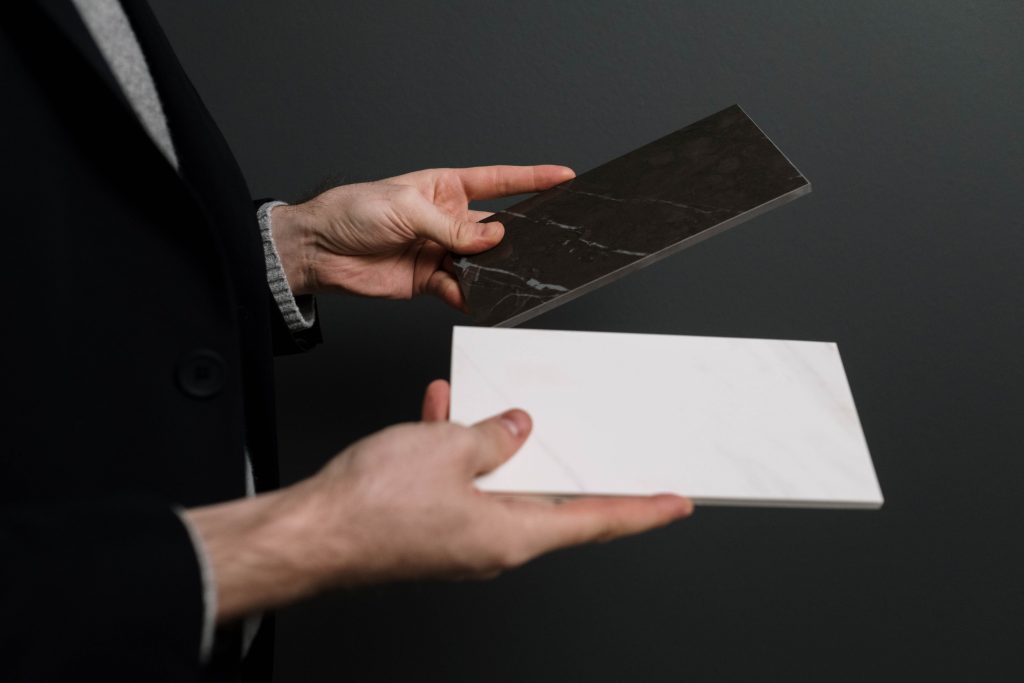
Tiles: Good Looks, Hidden Limitations
Tiles — ceramic, porcelain, or natural stone — are a familiar choice and widely available. In the right setting, they perform well. In the wrong one, they create ongoing problems.
The Pros
Wide variety of looks. Tiles come in an enormous range of colours, sizes, and finishes. For residential living areas, bathrooms, and kitchens, the aesthetic options are hard to beat.
Established and accessible. Tiles are widely understood, available everywhere, and straightforward for tradespeople to quote and install.
The Cons
Grout lines are a maintenance liability. Every joint between tiles is a potential trap for dirt, moisture, bacteria, and staining. In garages, commercial kitchens, or industrial environments, grout is almost impossible to keep clean and will deteriorate over time.
Vulnerability to heavy loads. Tiles are rigid and brittle. In spaces with heavy vehicle traffic, forklift loads, or frequent impact, cracking and chipping are common — and individual tile replacements are rarely a perfect match after years of use.
Slippery when wet. Many tile finishes — particularly polished porcelain or natural stone — become dangerously slippery when wet. In commercial spaces, this creates real liability risk.
Cold and hard underfoot. In basements or garages used as workshops or gyms, tiles offer no comfort and no thermal benefit.
Higher long-term costs. The initial install can be competitive, but factoring in grout cleaning, resealing, cracked tile replacement, and the labour involved, tiles often cost more over a decade than an epoxy system backed by a warranty.
Bare or Sealed Concrete: Simple, Cheap, and Unfinished
Many garages, warehouses, and basements simply have bare or lightly sealed concrete slabs. It’s the path of least resistance — but it comes with significant drawbacks.
The Pros
Low upfront cost. If the slab is already there, doing nothing costs nothing. Basic penetrating sealers are inexpensive and add a small layer of protection.
Simple. No installation process, no tradespeople required for the base option.
The Cons
Porous and prone to staining. Concrete is inherently porous. Oil, chemicals, and water penetrate and stain the surface permanently. In a garage or workshop, this happens quickly.
Dusty. Unsealed concrete sheds fine cement dust continuously — called “dusting” — which settles on cars, tools, and stored items and is a respiratory irritant over time.
Unattractive. A bare grey slab is a missed opportunity, especially in showrooms, offices, or residential spaces where presentation matters.
Not durable under abuse. Bare concrete chips, spalls, and erodes faster than either tiles or epoxy under heavy use.
Comparison Table
| Factor | Epoxy Flooring | Tiles | Bare/Sealed Concrete |
|---|---|---|---|
| Cost (installed) | Mid–high upfront, low ongoing | Mid upfront, moderate ongoing | Low upfront, higher ongoing |
| Lifespan | 10–20+ years (warranted) | 10–15 years (with maintenance) | 5–10 years before significant wear |
| Maintenance | Very low — sweep and mop | Moderate — grout cleaning, resealing | High — dusty, stains, requires sealing |
| Installation time | ~2 days (Custom Floor Works) | 3–5+ days (plus grout cure time) | Minimal (sealer only) |
| Slip resistance | Excellent (Anti-Slip systems available) | Poor when wet (unless textured) | Moderate |
| Load bearing | Excellent — handles vehicles and forklifts | Poor under heavy/repeated impact | Moderate |
| Aesthetics | High — multiple systems and finishes | High in domestic settings | Low |
| Hygienic | Excellent — seamless, no grout | Poor — grout harbours bacteria | Poor — porous |
Best Use Cases: When to Choose Each Option
Choose Epoxy Flooring When…
- You’re finishing a residential garage and want a surface that handles cars, bikes, and tools without staining or cracking
- You’re fitting out a commercial showroom, office, or retail space where appearance and durability both matter
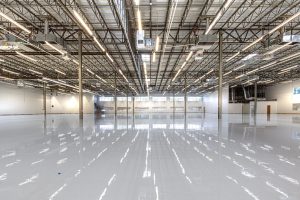
- You manage a warehouse, workshop, or industrial facility where hygiene, chemical resistance, and load-bearing strength are priorities
- You want a low-maintenance floor backed by a warranty
- You’re finishing a basement or patio that needs to look great and withstand Melbourne’s variable conditions
Browse Custom Floor Works’ completed projects to see the range of outcomes across residential and commercial installs.
Choose Tiles When…
- You’re tiling a bathroom, kitchen splashback, or domestic living area where tiles are genuinely fit for purpose
- The space sees foot traffic only and no heavy loads
- A specific look — such as natural stone or Moroccan pattern — is the priority and the maintenance trade-off is accepted
Stick With Sealed Concrete When…
- The space is purely functional and appearance is completely irrelevant
- Budget is the only consideration and the surface won’t see oil, chemicals, or heavy use
- It’s a temporary solution before a proper floor system is installed
Frequently Asked Questions
Is epoxy flooring more expensive than tiles?
The upfront installed cost of epoxy is broadly comparable to mid-range tiles — and often lower than premium porcelain or stone. Over a 10-year period, epoxy almost always works out cheaper when you account for tile replacement, grout maintenance, and resealing costs.
How long does epoxy flooring last in a garage?
Most residential and commercial projects are completed in two days. The slab is prepared on day one (grinding and priming), and the epoxy system is applied and cured by day two. Some large-scale industrial jobs may take longer depending on area size and system complexity.
Can epoxy flooring be slippery?
Standard high-gloss epoxy can be slippery when wet. Custom Floor Works’ Anti-Slip system incorporates aggregates into the top coat to deliver strong grip — suitable for wet areas, commercial entries, and outdoor patios. Always specify your slip resistance requirements when getting a quote.
How long does epoxy flooring take to install?
Most residential and commercial projects are completed in two days. The slab is prepared on day one (grinding and priming), and the epoxy system is applied and cured by day two. Some large-scale industrial jobs may take longer depending on area size and system complexity.
Ready to Upgrade Your Floor?
If you’re weighing up your options for a garage, basement, showroom, or commercial space in Melbourne, epoxy flooring is worth a proper look. Custom Floor Works installs Full Flake, Stone Effect, Plain Colour, and Anti-Slip epoxy systems across residential and commercial properties — with a 10-year warranty and a typical two-day turnaround.
**[Get a free epoxy flooring quote from Custom Floor Works →](https://customfloorworks.com.au/)**
No obligation. Fast response. Melbourne-based, locally operated.